


Blog
The Ultimate Beginner’s Guide to Jewelry Making: Tools, Findings, and Techniques

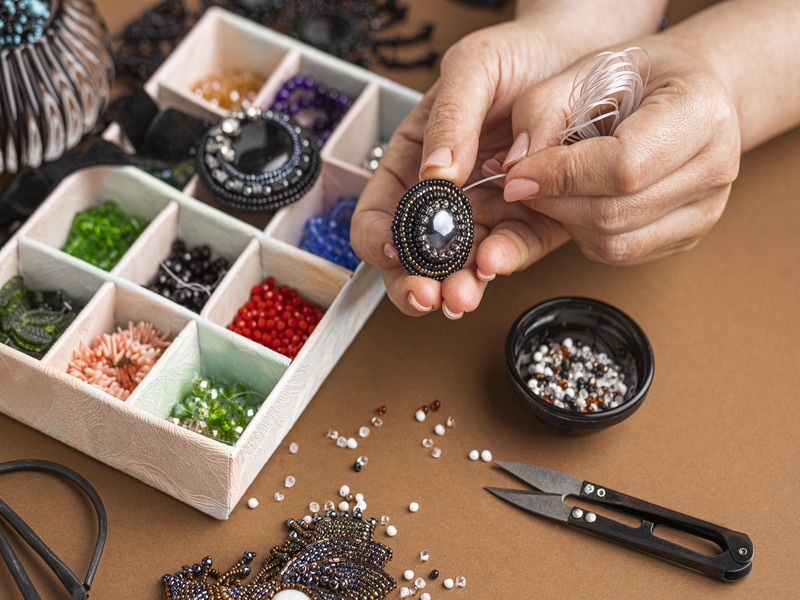
There is something really rewarding about going through the process of designing and putting together your own custom accessories. Even if you’re aiming for personalized gifts for friends, want pieces that play nice with your favorite outfits, or you’re thinking of kicking off a small creative business, getting into DIY crafting can be way easier than it sounds.
Now if you’re sitting there with a blank workspace and you’re like “ok , where do I even start” , don’t sweat it. This ultimate beginner’s guide to jewellery making supplies and the basic know-how you’ll want, so you can start making beautiful pieces from home with confidence.
1. The Beginner’s Toolkit: Essential Supplies
Before you string your first bead, you need to set up a basic toolkit. Having the right core materials keeps your process smooth and prevents your projects from coming unraveled.
The Foundation: Structural Wires and Threads
Every jewellery piece kinda needs a solid skeleton. The structural foundation you pick will depend on the bracelet, necklace, or ring vibe you’re designing:
- Strong Flexible Metal Wire: This is that backbone for traditional jewellery. Choose a good quality, bendable wire, durable, yet still easy to guide into shape. You’ll use it a lot for wrapping crystals, building structured wire rings, shaping sturdy loops, and even for DIY wire charms. It’s basically your main helper, if you want clean structure.
- Nylon Elastic: If your goal is to create comfortable, everyday beaded bracelets or chokers, nylon elastic is a must-have. It stretches easily over wrists without requiring complex clasps, making it the perfect choice for quick, beginner-friendly beadwork.
- Clear Monofilament Nylon Thread: For delicate, illusion-style necklaces where you want the beads to look like they are floating on your skin, a fine clear monofilament thread provides invisible, lightweight strength.
The Essential Hand Tools
If you want to handle metal wires and little parts cleanly , honestly save your kitchen scissors, and grab three basics jewellery pliers instead:
- Chain-Nose Pliers: With a flat inside surface, they are really good for holding wire, opening jump rings, and sliding those odd wire ends back in.
- Round-Nose Pliers: The rounded jaws make it easy to shape an even, smooth loop for earrings or those beaded dangles too.
- Wire Cutters: Use a sharp flush cutters pair for a neat , smooth cut through flexible metal wire , so you don’t end up with rough sharp edges afterward.
2. Understanding Jewellery Findings
In the crafting world, “findings” is sort of the official umbrella term for all the structural components that connect your design bits together. They kinda turn a loose string of beads into a wearable piece of art, like it was nothing.
Here are the most common findings a beginner really should keep in their craft organizer:
- Jump Rings: Small split metal rings used to link different components, like when you connect a charm to a chain or attach a clasp.
- Clasps: The closure mechanism for your jewelry. Lobster claws and toggle clasps are honestly the easiest, and also some of the most secure styles for beginners to practice with.
- Headpins and Eyepins: Short pieces of straight wire with either a flat stop (headpin) or a small loop (eyepin) at one end. You slide beads onto them to make independent dangles and drops, pretty fast.
- Crimps (Crimp Beads): Tiny, soft metal tubes that you crush down with pliers to anchor the ends of your nylon thread or wire securely next to a clasp.
3. Fundamental Jewellery Making Techniques
Once you have your supplies ready, it is time to practice the foundational skills. At this point you’ll want to work through three basic techniques, and with them you can make thousands of unique designs, really.
Technique A: Opening and Closing Jump Rings
It sounds simple, but there is a trick to handling jump rings without warping their circular shape. Never pull the ends directly outward away from each other. Instead, grip each side of the ring with a pair of pliers and twist one side forward and the other side backward (like opening a door). Loop your chain or charm inside, then twist the pliers back to close the gap seamlessly.
Technique B: Creating a Simple Wire Loop
To turn some focal bead into a really nice hanging charm, or even an earring piece, try this easy approach, no drama:
- Slide your bead onto a headpin.
- Use your chain-nose pliers and bend the wire that’s sticking out right above the bead at a sharp 90 degree angle.
- Then trim the extra wire down so you have around 1 cm left. Not more, not less.
- Next take your round-nose pliers, hold the very end of the wire and start rolling it back, toward the bead, until you get a tidy circular loop.
Technique C: Securing Elastic Bracelets
When working with nylon elastic, the secret to a professional finish is the knot. Tie a secure surgeon’s knot (a standard square knot, but with an extra pass through the loop) and pull it tightly. To make sure it never unravels, add a tiny dot of clear PVA glue or specialized craft adhesive directly to the knot before trimming the excess elastic tails. Once dry, you can slide an adjacent bead right over the knot to hide it completely.
4. Simple First Projects to Build Your Confidence
Don’t stress too much about going after all that intricate multi-layered stuff on your first day. Just start small and get a feel for how your materials kinda act, especially when you’re moving fast.
- The Classic Stretch Bracelet: Basically about practicing stringing a pattern of colorful gemstone beads onto your nylon elastic. Getting the knot right, then tucking it inside one of the beads, is a great way to train your tension control.
- Minimalist Wire Rings: Cut a short length of strong flexible metal wire. Wrap it around a cylindrical object like a marker or a ring mandrel , so the size lines up with your finger. Then use your round-nose pliers to twist the ends into decorative swirls or tight safety loops.
- Dangle Earrings: Slide a few complimentary beads onto an eyepin, make a simple wire loop up top with the same technique mentioned earlier, and connect that loop straight to an earring hook using a jump ring .
Ready to Start Creating?
Jewellery making is this surprisingly relaxing, really fulfilling pastime that lets you say something about your personal style without even trying too hard. If you stock up on the dependable basics like a strong yet flexible metal wire and a durable nylon elastic, you’ll basically have the main stuff in place so you can try out new ideas without worry.
Go on, check out the HaberCrafts Jewellery Making Supplies Collection, pick up your core tools and those handy little findings, clear a flat spot on your table— and then just let your creativity take over.